The Concept
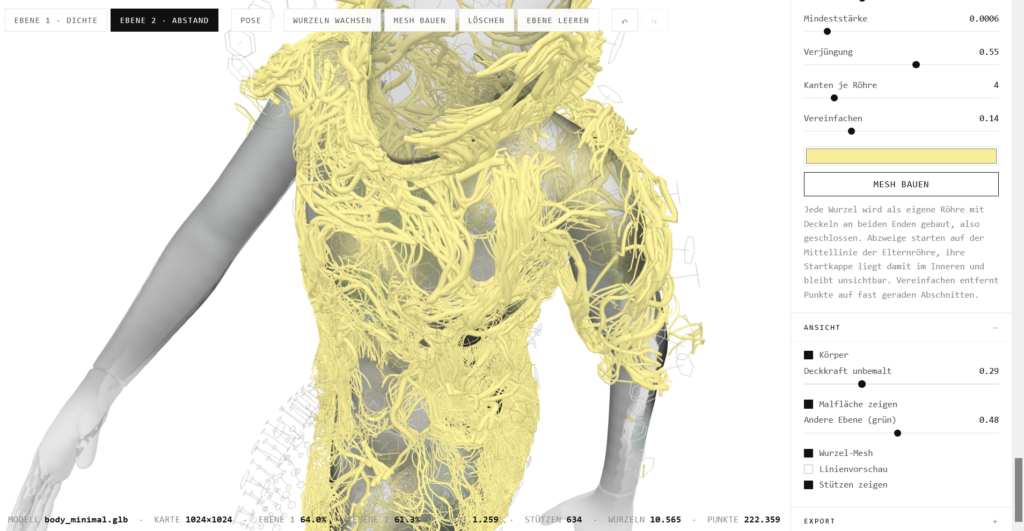
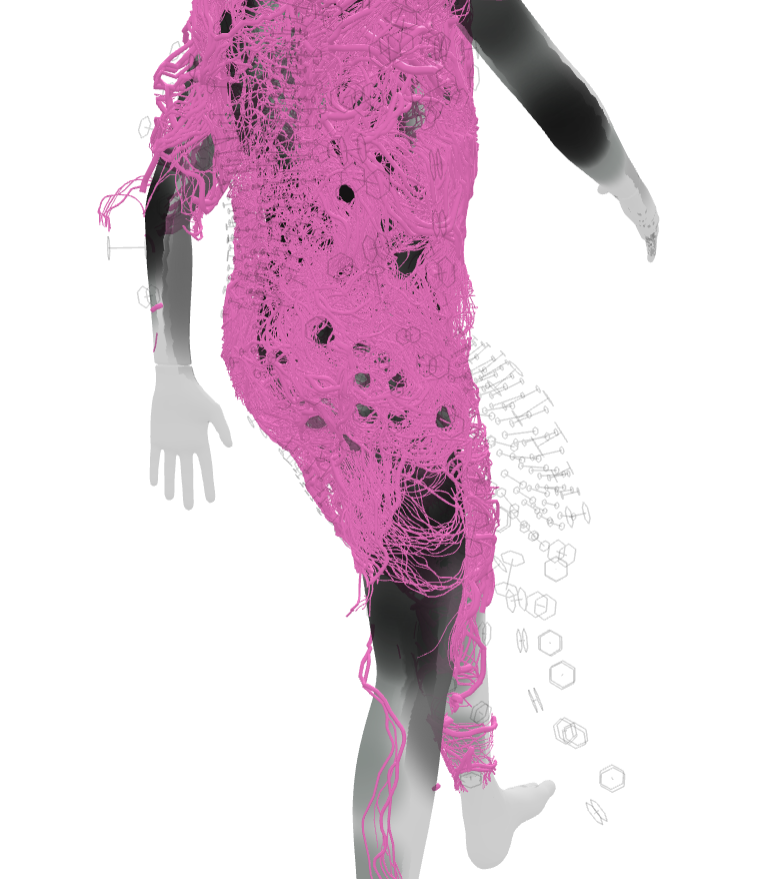
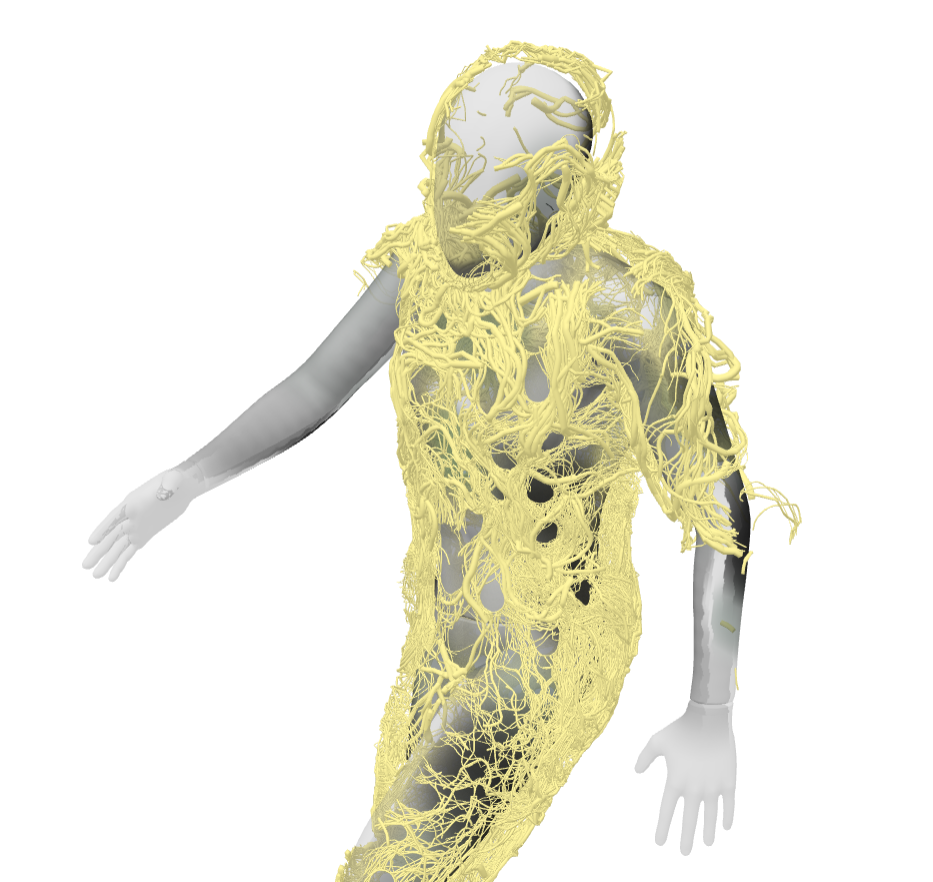
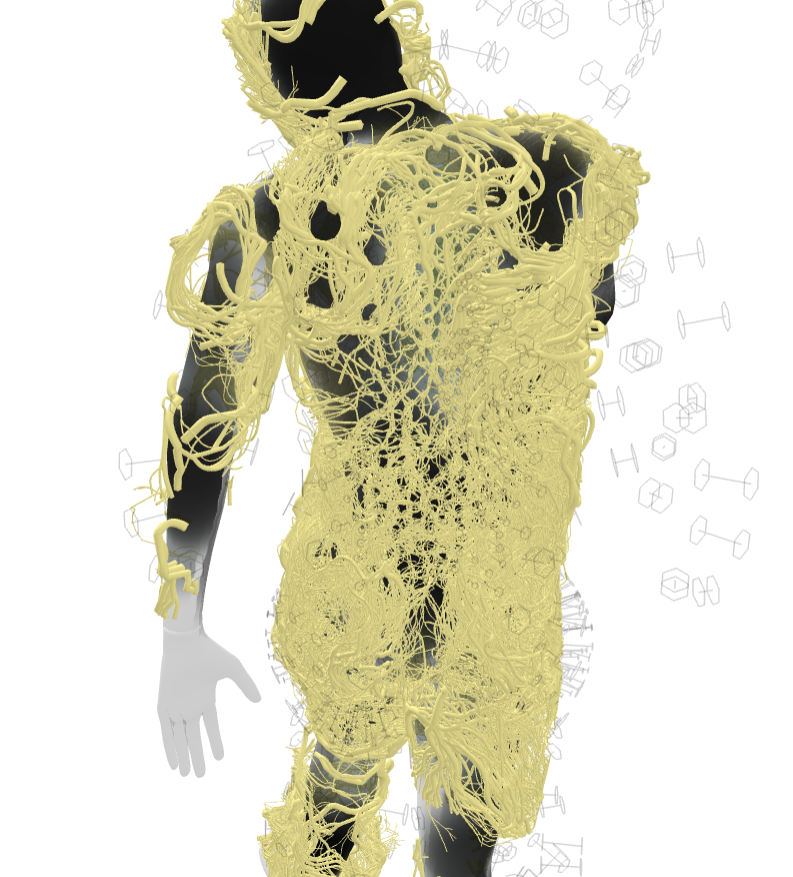
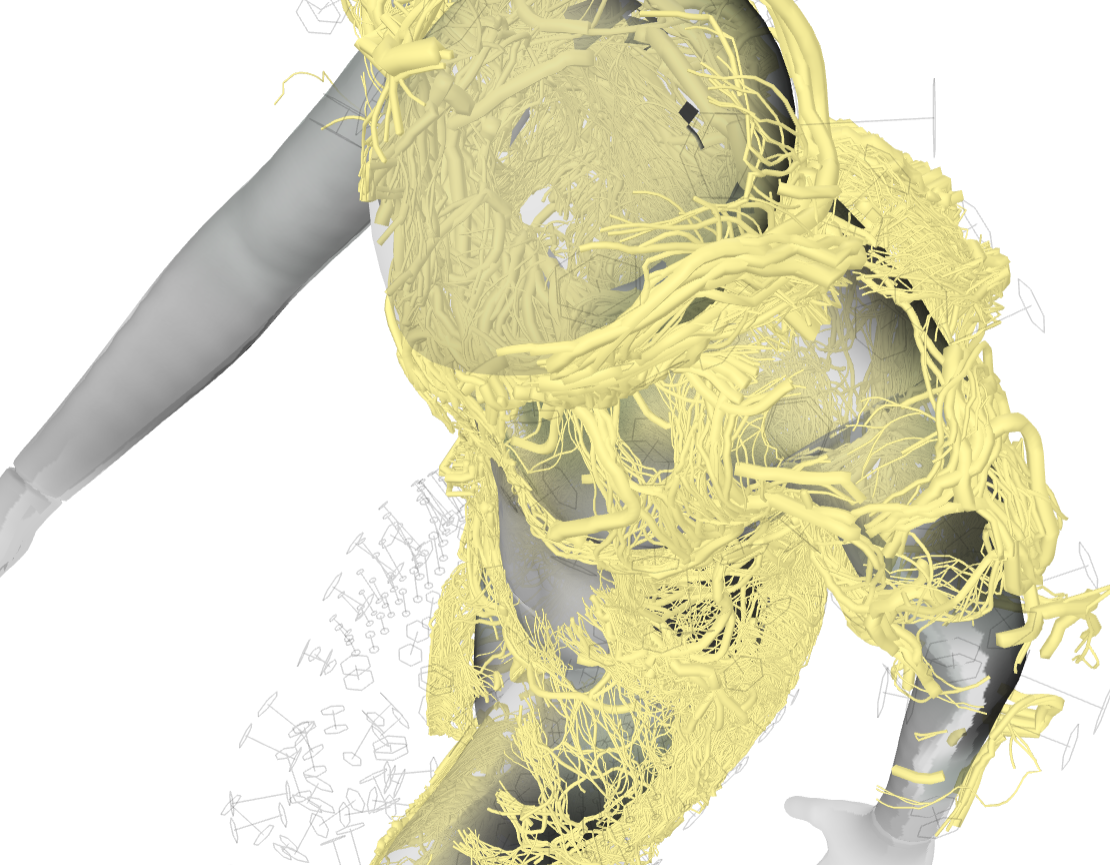
What if garments weren’t woven on a loom, but grown into existence? The Rhizomorphic Root Weaver is an experimental software prototype that simulates the complex, adaptive behavior of plant root networks to design wearable, living structures. Root systems in nature continuously adapt—navigating obstacles, densifying where nutrients are abundant, and reinforcing themselves against mechanical stress. This tool applies those bio-inspired growth rules directly to the human form, exploring how computational root behavior can inform the future of bio-manufactured apparel, living textiles, and functional organic design.
How it Works
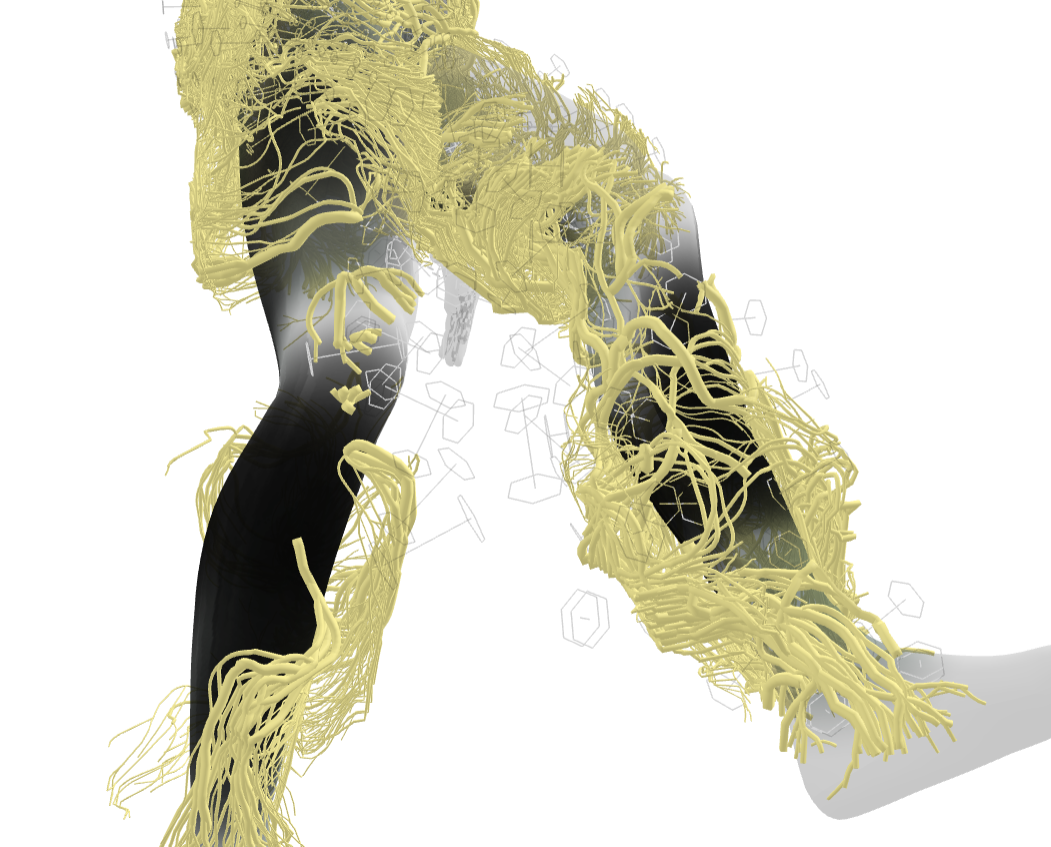
The design process begins with painted vertex maps—custom digital heatmaps applied directly to the body mesh—which define seed locations, growth obstacles, and environmental preferences. Once seeded, autonomous agents programmed with root-inspired boid behaviors begin to expand across and around the body surface. These computational roots search, split, weave, and fuse together based on the underlying map data, creating intricate, self-organizing mesh networks. The resulting digital geometry directly models how living plant organisms—such as grass root systems—could be guided during growth to create functional, wearable structures with variable density, flexibility, and strength.
Part of a Broader Exploration
As part of an ongoing series on generative design systems, this prototype investigates how bio-computational logic can serve as a co-creation partner in fashion and body architecture. It bridges digital simulation with emerging biological manufacturing techniques, offering a sandbox to test how living systems can be directed to meet human functional and aesthetic needs.
In commitment to open-source collaboration, the underlying codebase was generated using advanced agentic coding workflows and is released alongside comprehensive technical guidelines to support further research in computational biology and speculative design.
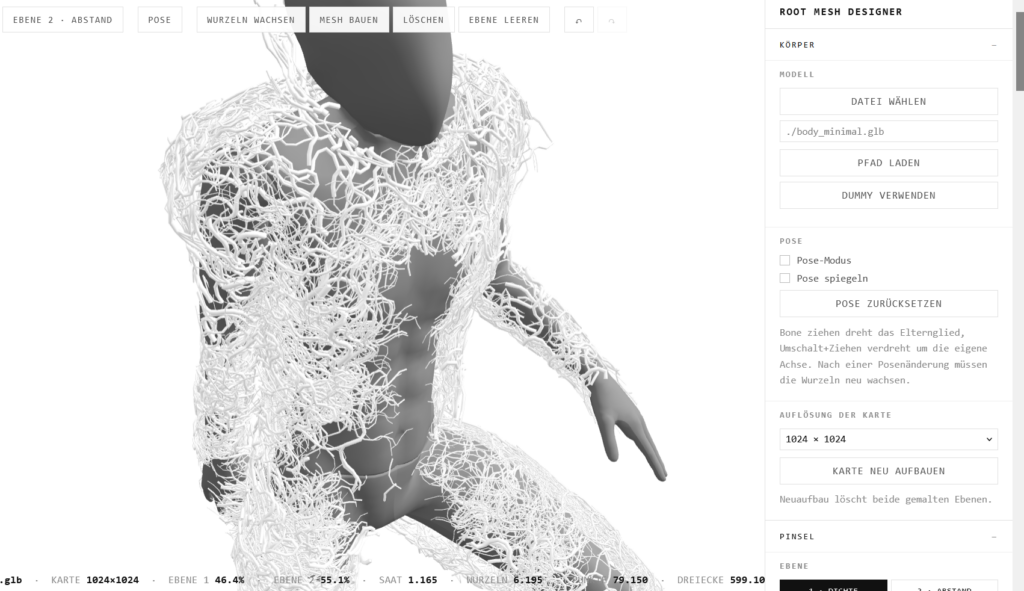
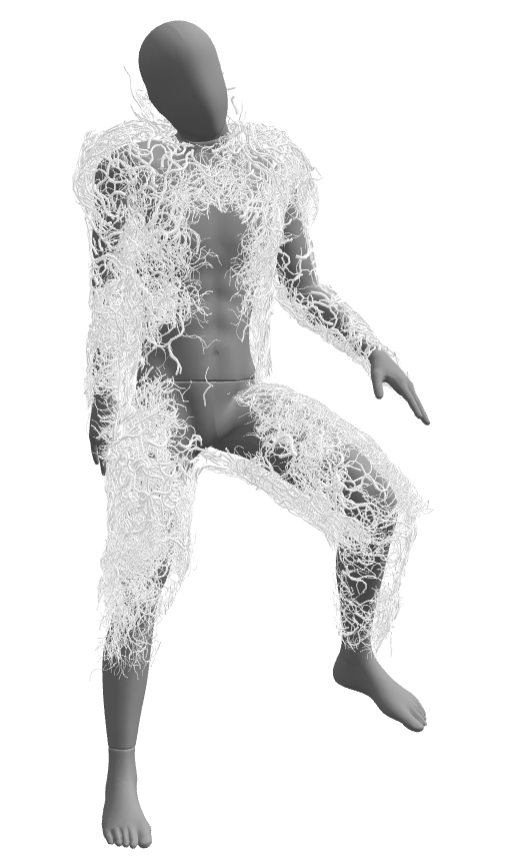
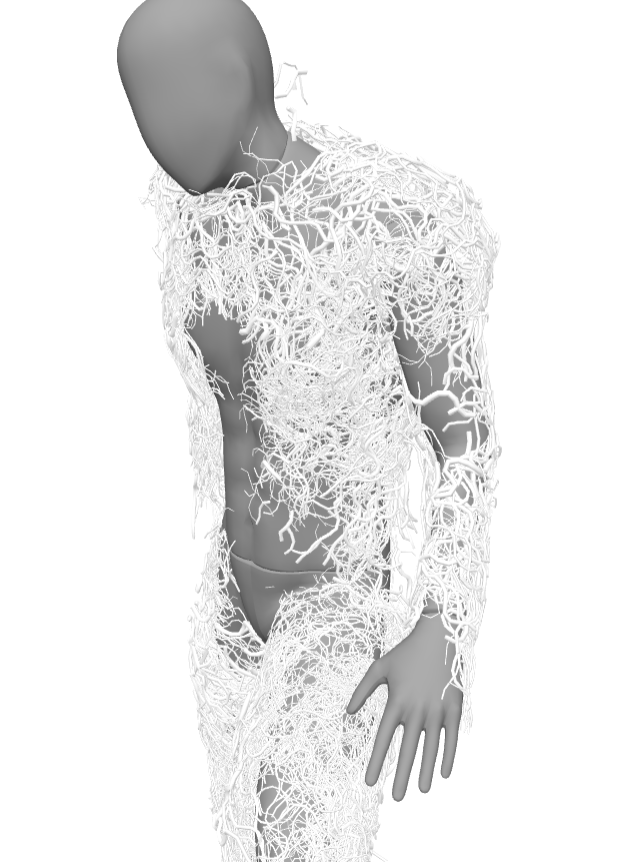
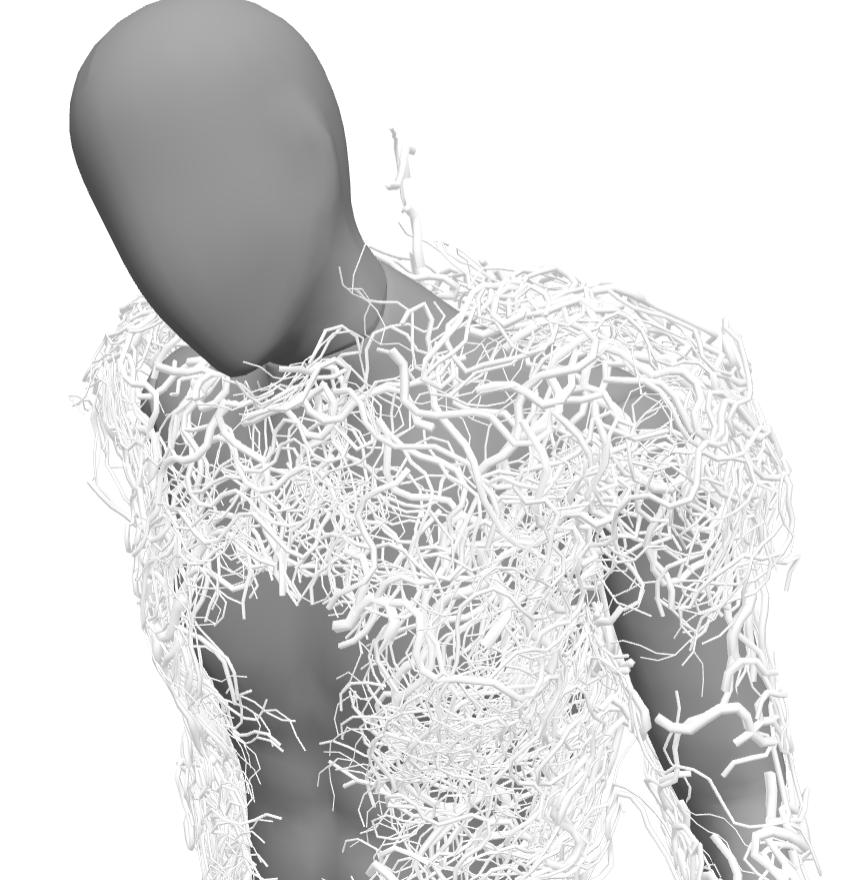
cyclindric growth constraints